It's never been easier to get started using AWS
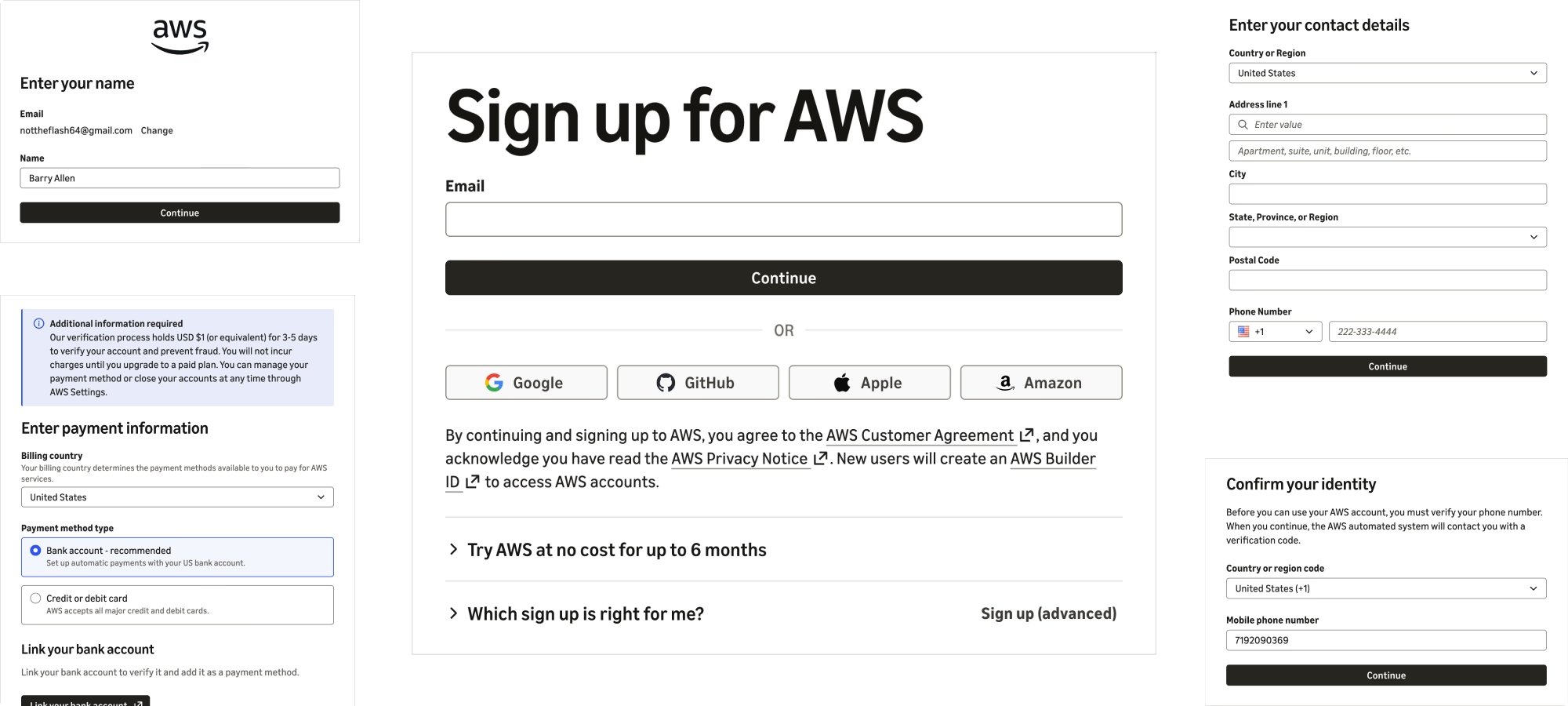
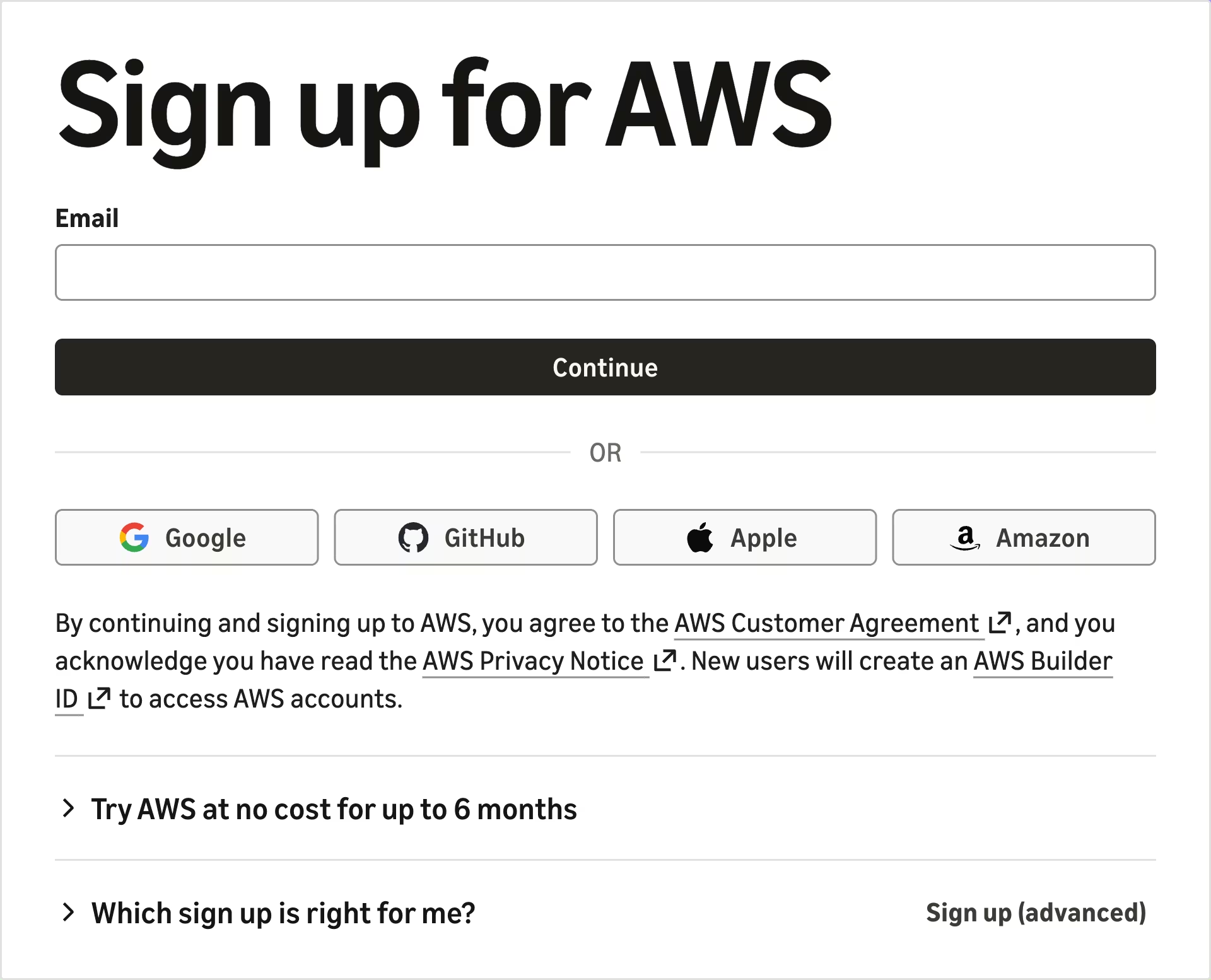
We simplified the sign-up experience for new AWS devs by introducing social login, reducing 40% of steps, and automating a best-practice environment from the start, allowing devs to to configure less and deploy faster.
AI lets developers build faster then ever and AWS needed to stay ahead
AWS needed to give devs what they value most: the ability to deploy quickly and confidently, without needing a degree in cloud infrastructure.
We tackled this head-on by rethinking the new developer experience- reducing the time, steps, and manual configurations it takes for a new dev to deploy their first project.
- How can we help developers build faster and worry about configuration less?
- How can we simplify the getting started and sign in experience while respecting our other sign-in methods?
- With automating initial configurations, how do we ensure the user sees a consistent UI?
Great onboarding isn’t just fewer steps
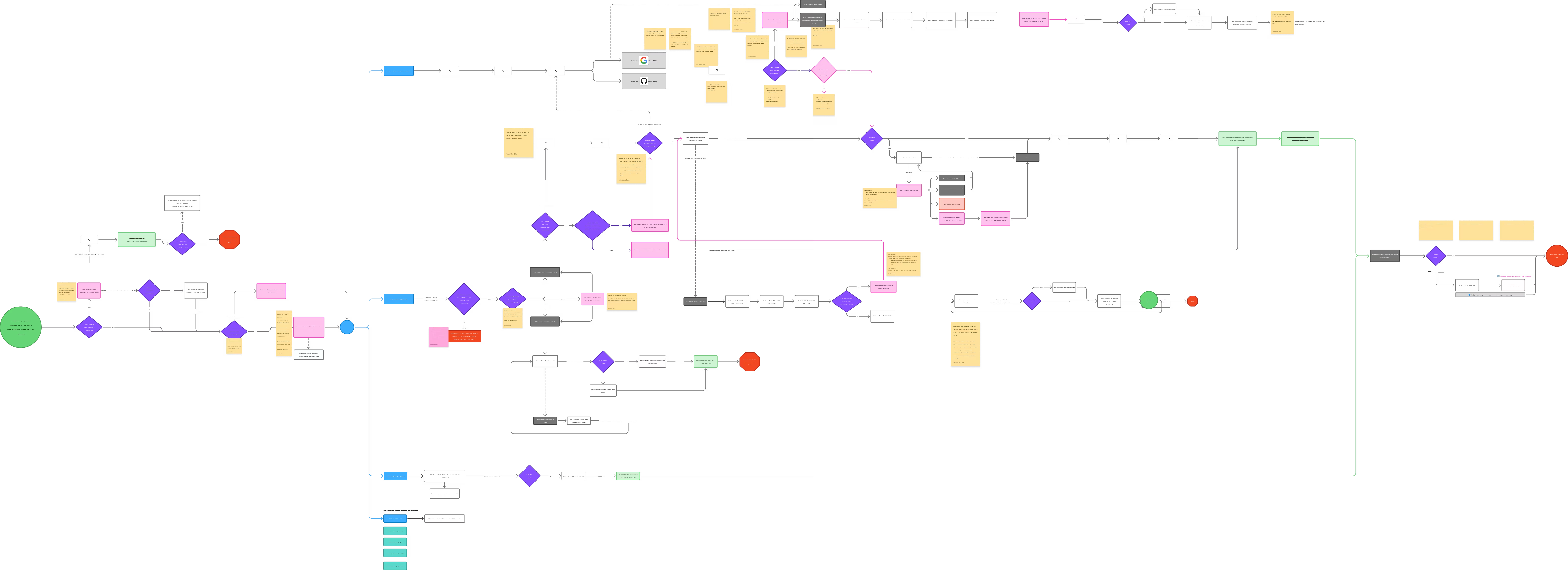
Solving for the happy path isn't enough. At scale, onboarding experiences need to be robust across different customer segments, country-specific requirements, and seamless in how different backend systems connect.
The best solution is one users barely notice
Despite spanning legacy backend systems owned by separate cross-functional teams, the new onboarding experience radically compresses setup effort. Users gain an AWS Builder ID, access to an updated free tier, and an environment pre-configured with security best practices—allowing them to focus immediately on building.
-
Land on sign up
-
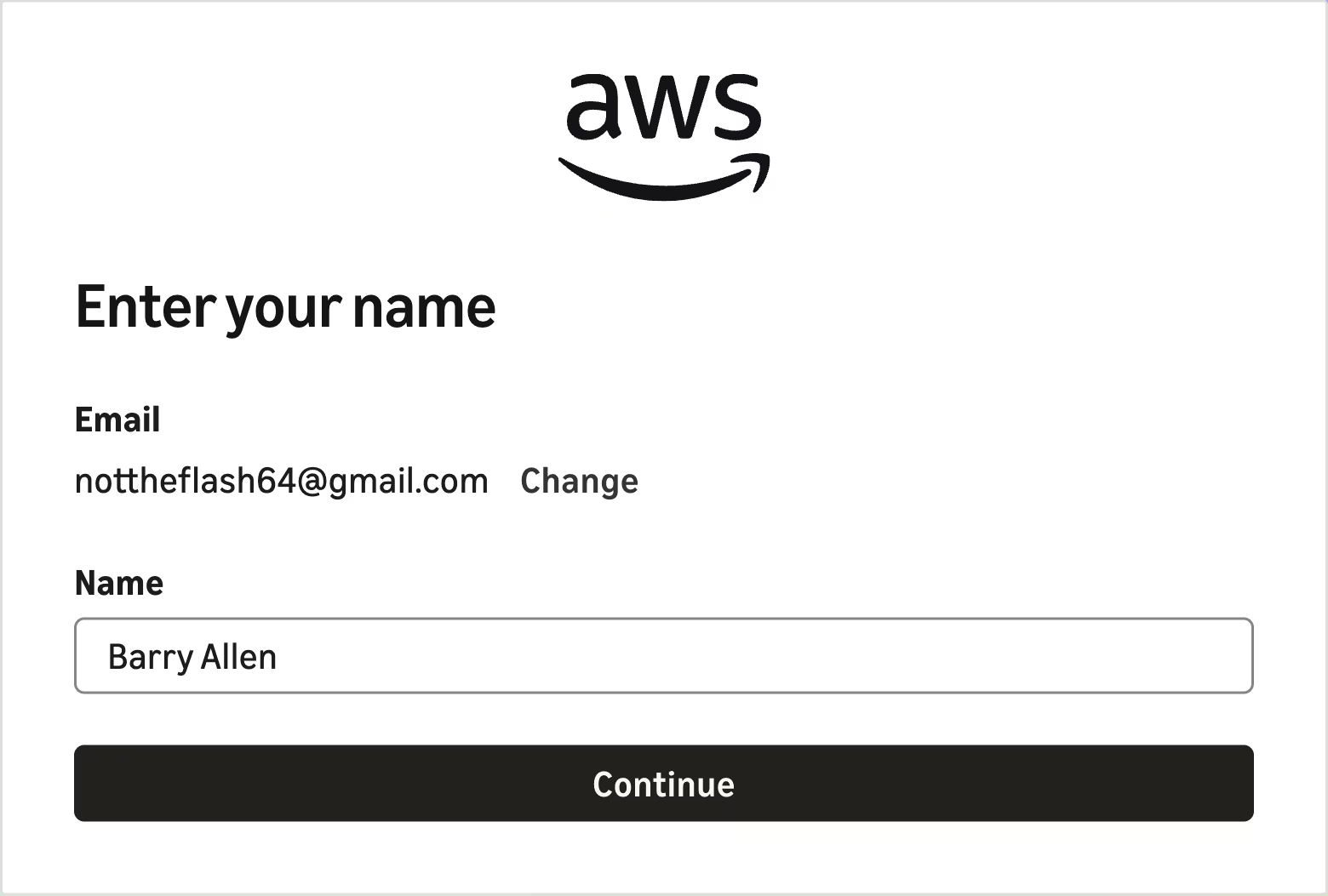
Create your identity
-
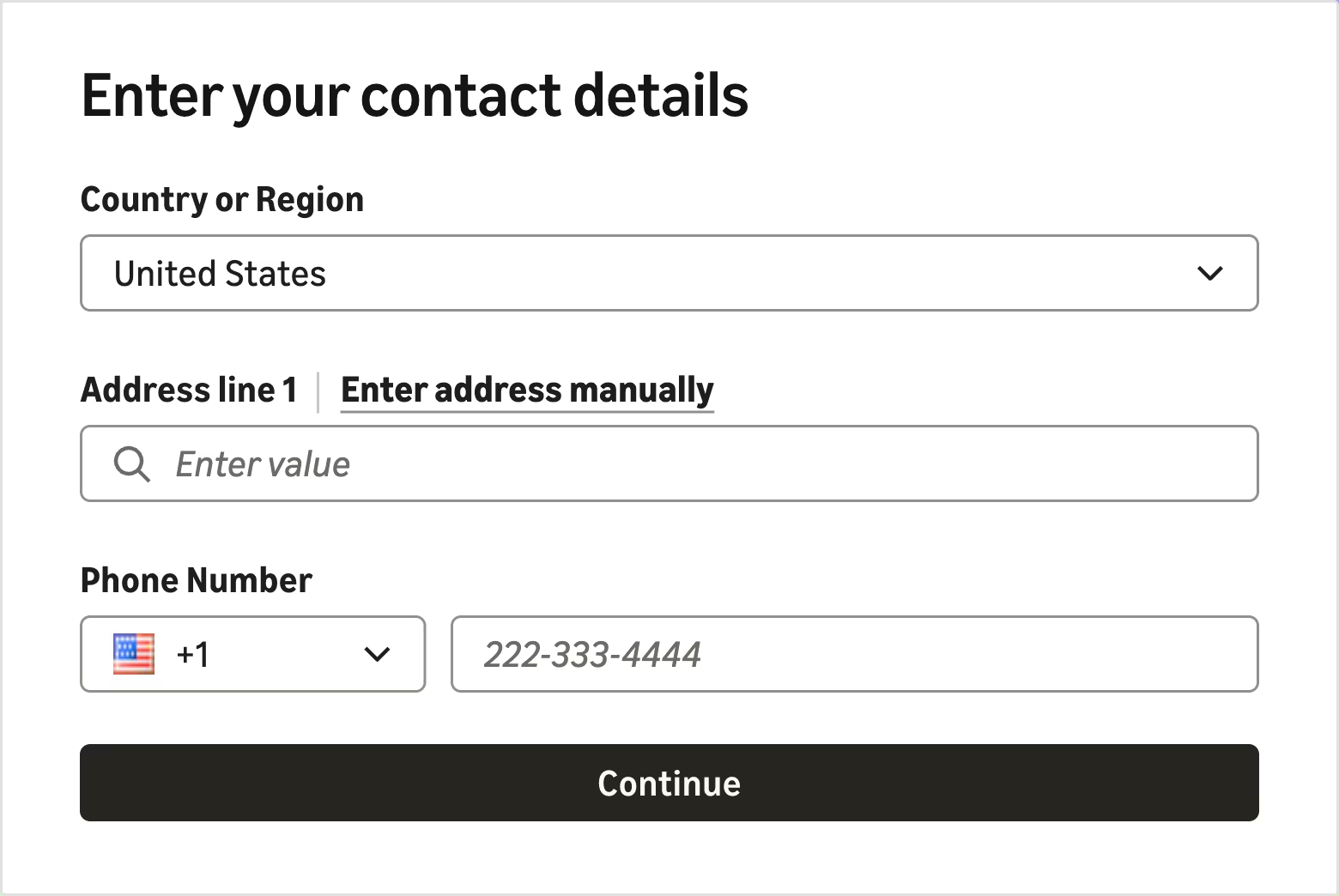
Confirm your details
-
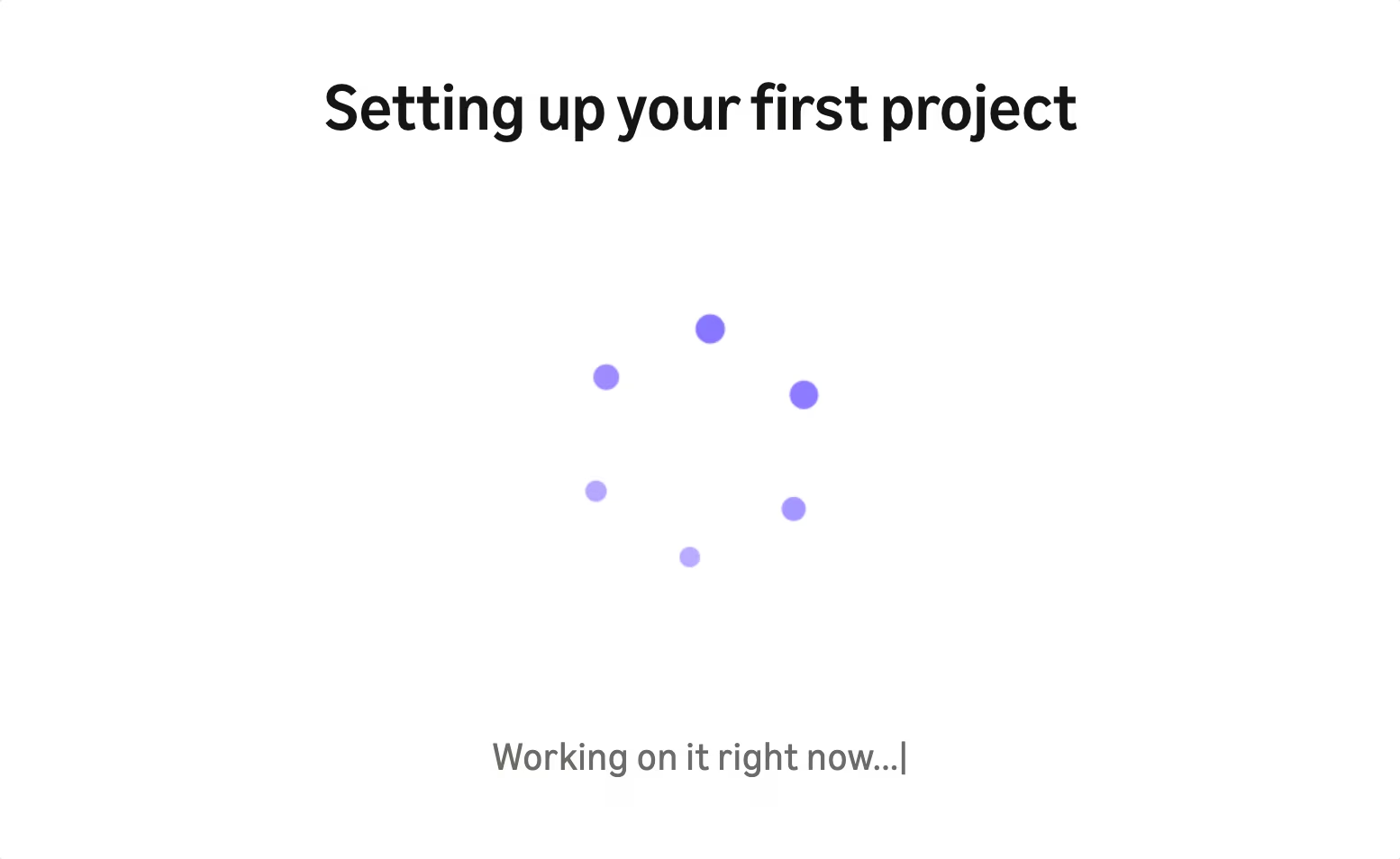
Start building
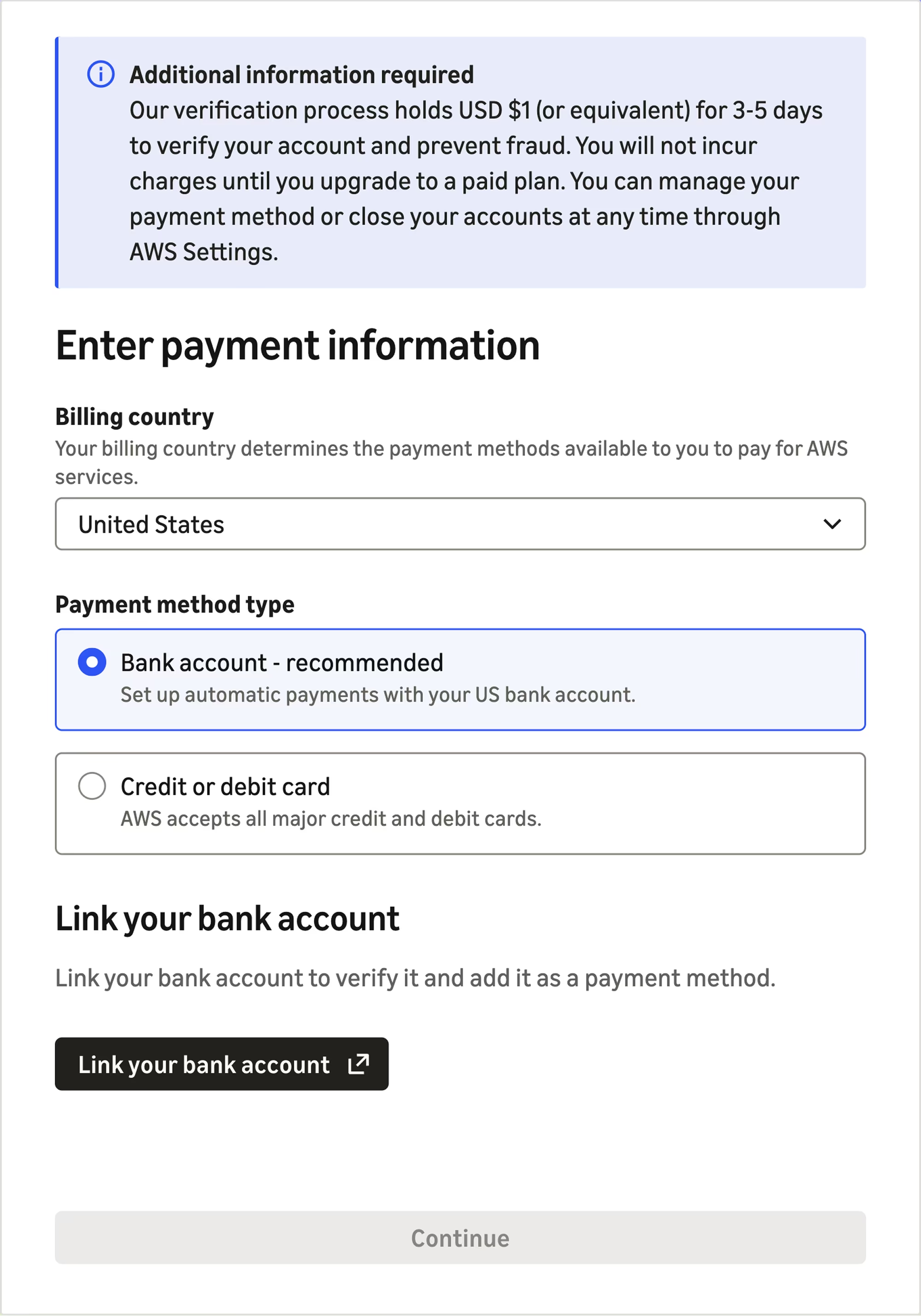
We optimizing for speed and designed for risk
To get developers building as fast as possible, we deferred non-essential data collection and stripped away unnecessary friction from the primary onboarding flow.
Rather than subjecting everyone to exhaustive verification upfront, we implemented adaptive friction, only introducing secondary verification steps when risk-detection signals require it.
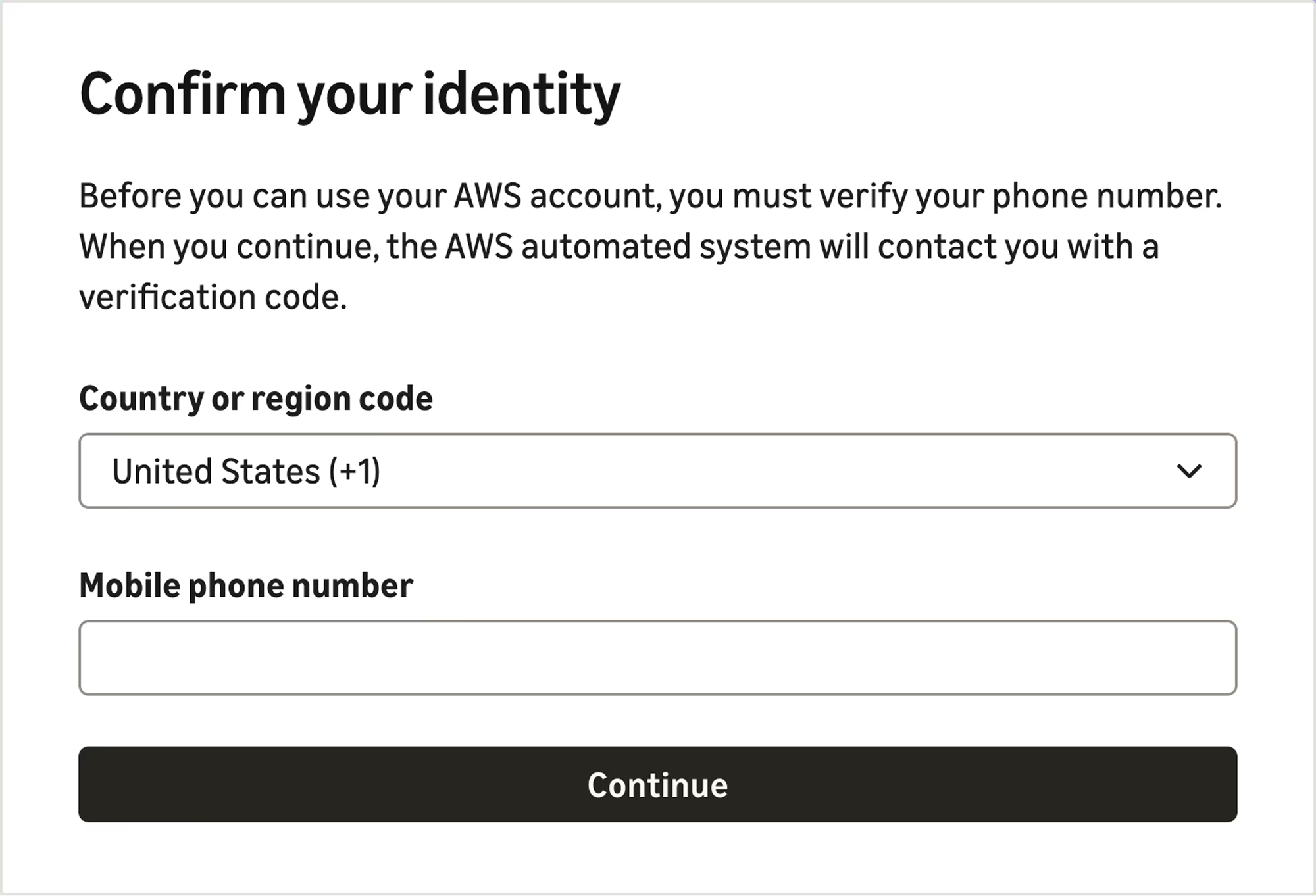
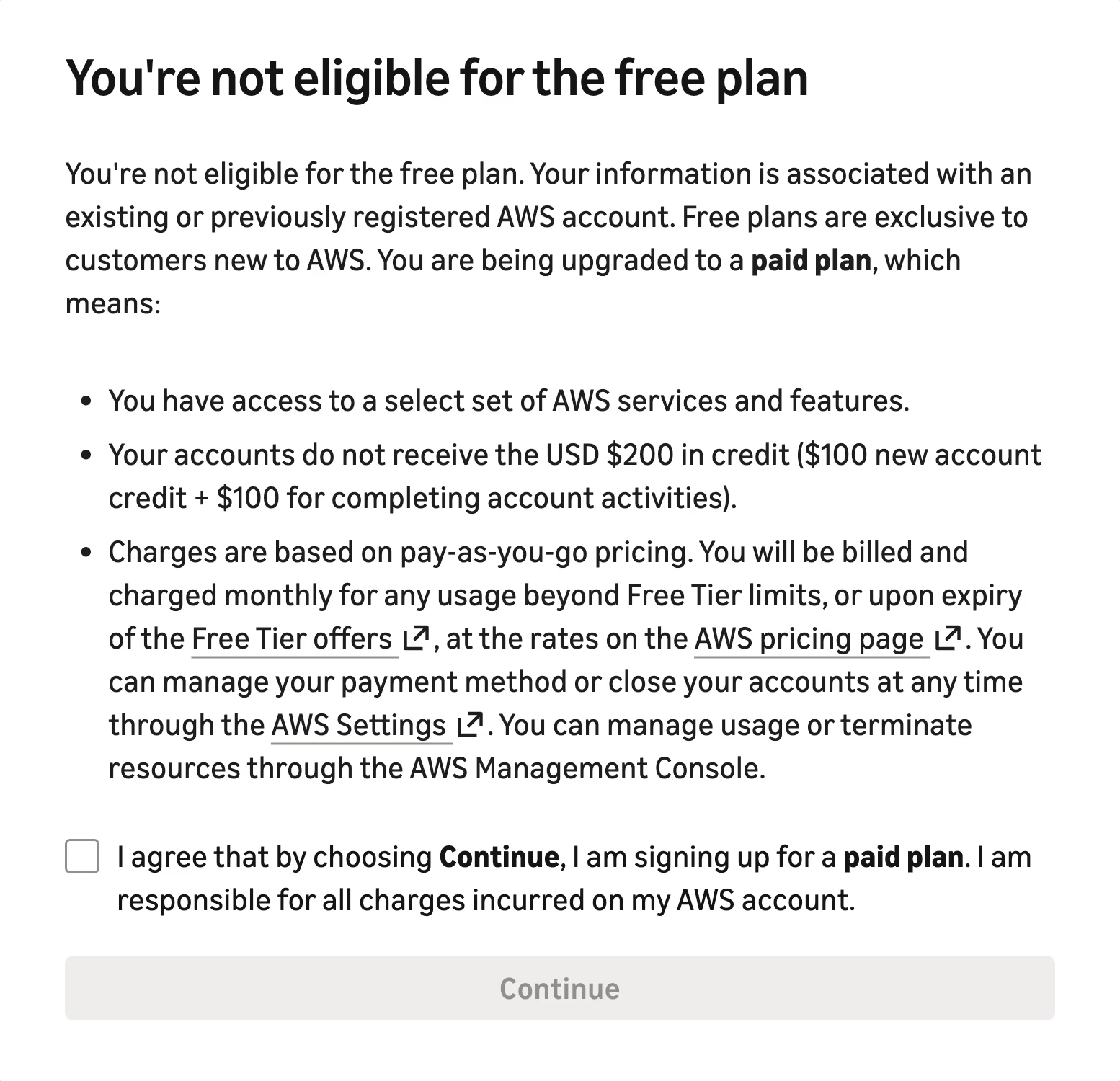
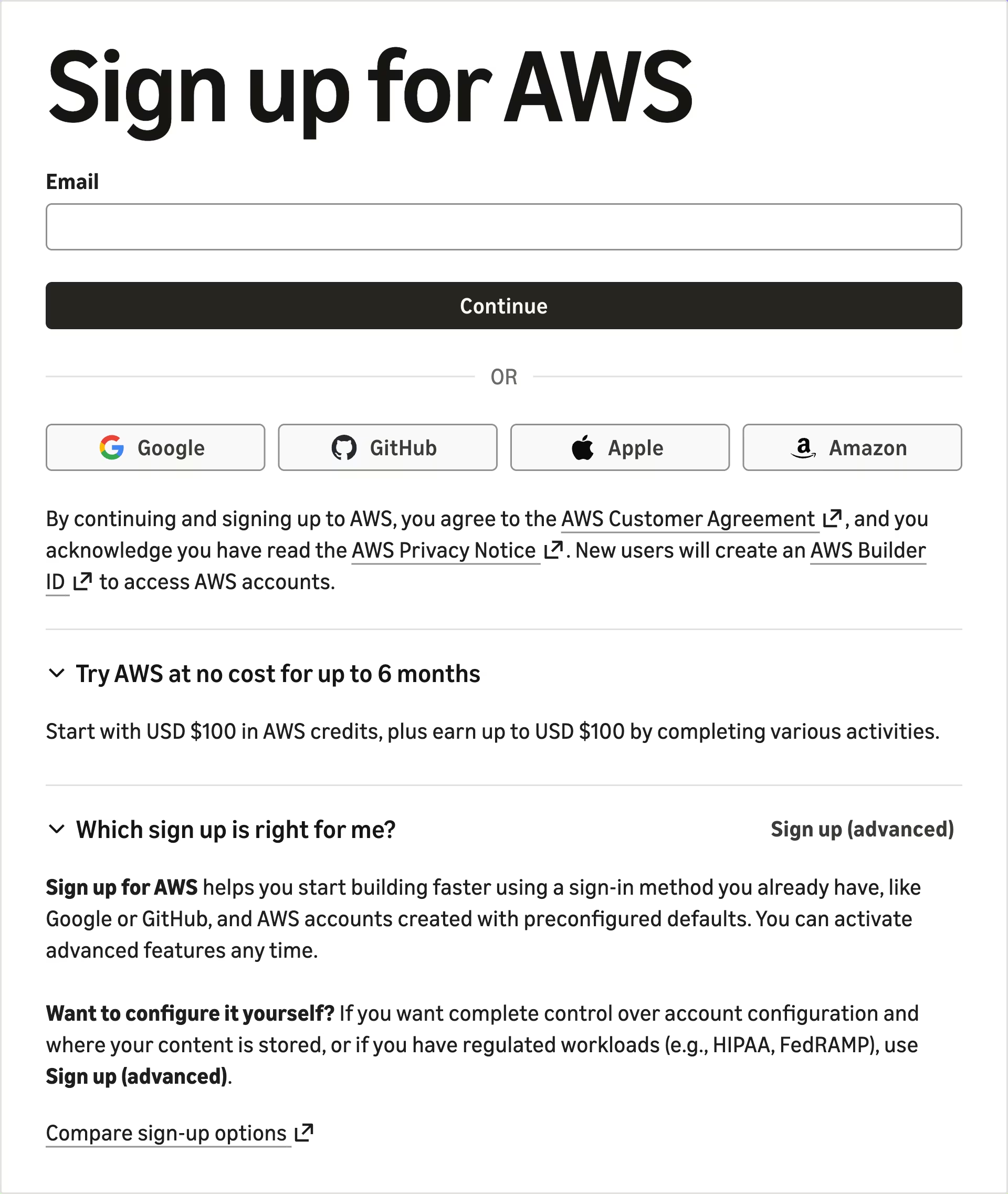
The hard trade-off: Building for new builders first
Rather than forcing every user through an enterprise-grade sign-up process, we made a hard call: optimize the main front door for new developers and startups joining the free tier, and relegate advanced configuration to a specialized path.
Don’t worry, we didn’t forget about console sign-in
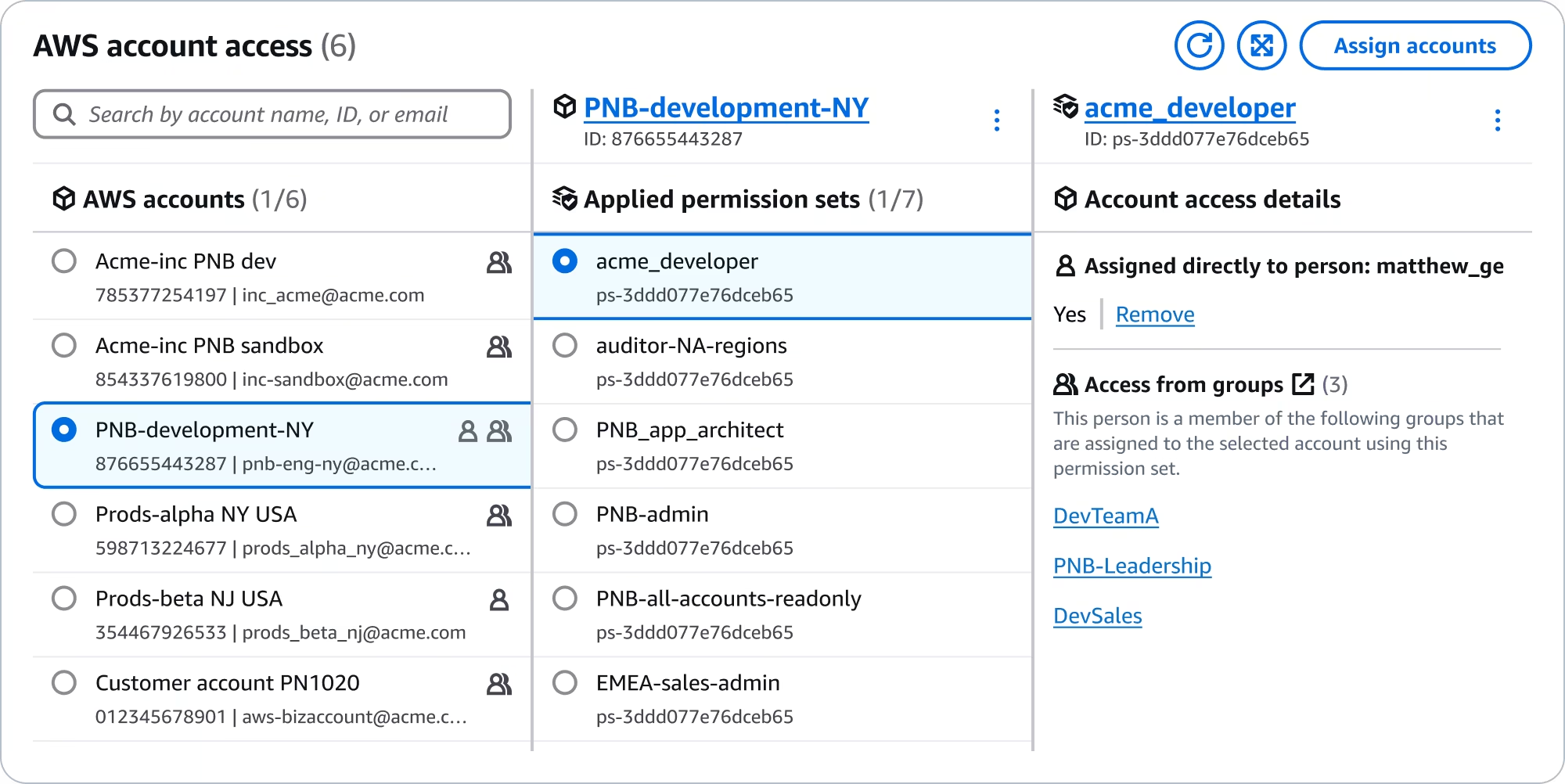
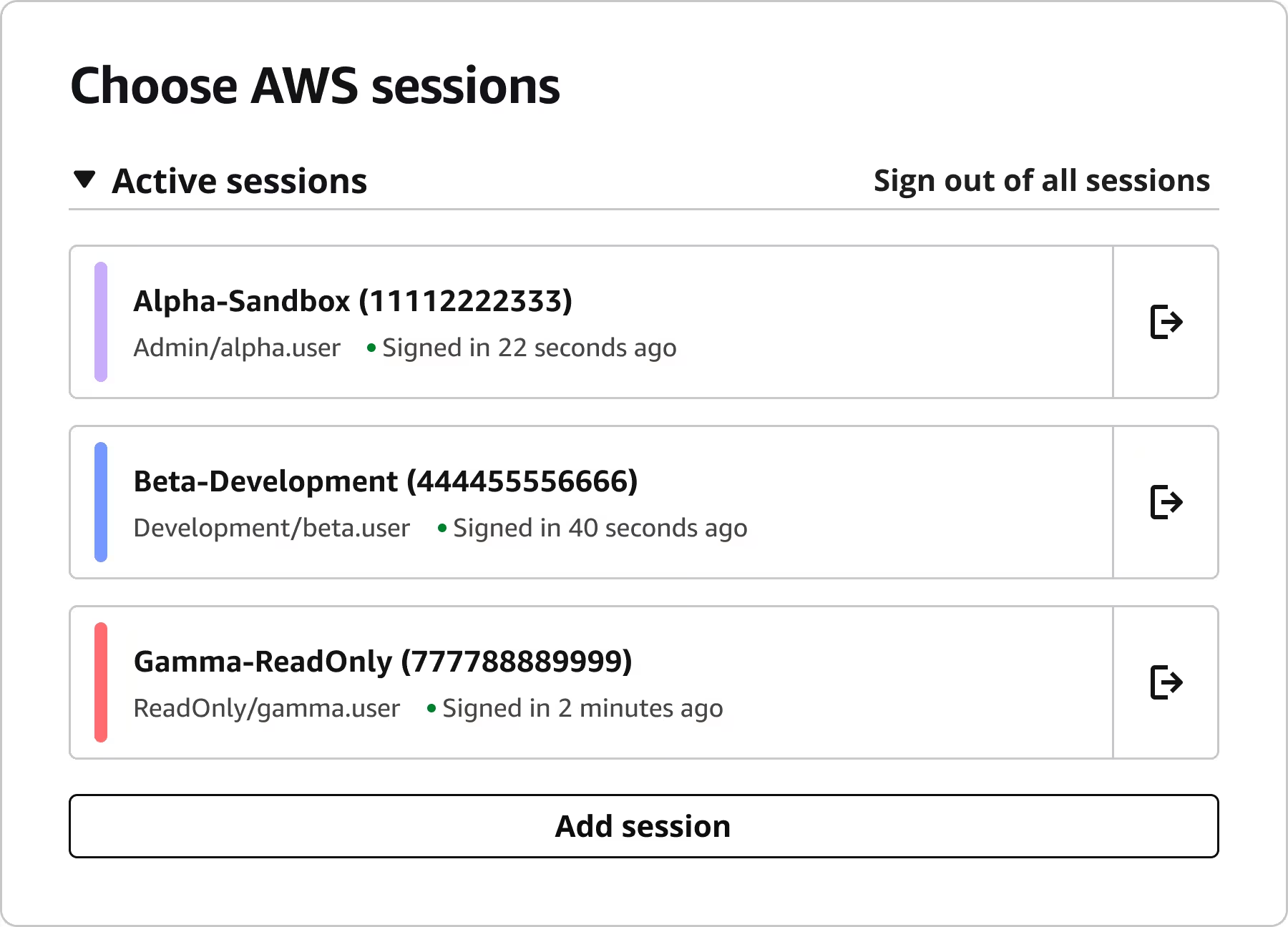
Sign-in has it's own architecture problems to solve, due to all the legacy sign-in methods we have to maintain. In this update we started to consolidate sign-in by introducing social logins to the existing root and IAM sign-in methods while also updating the multi-session experience.
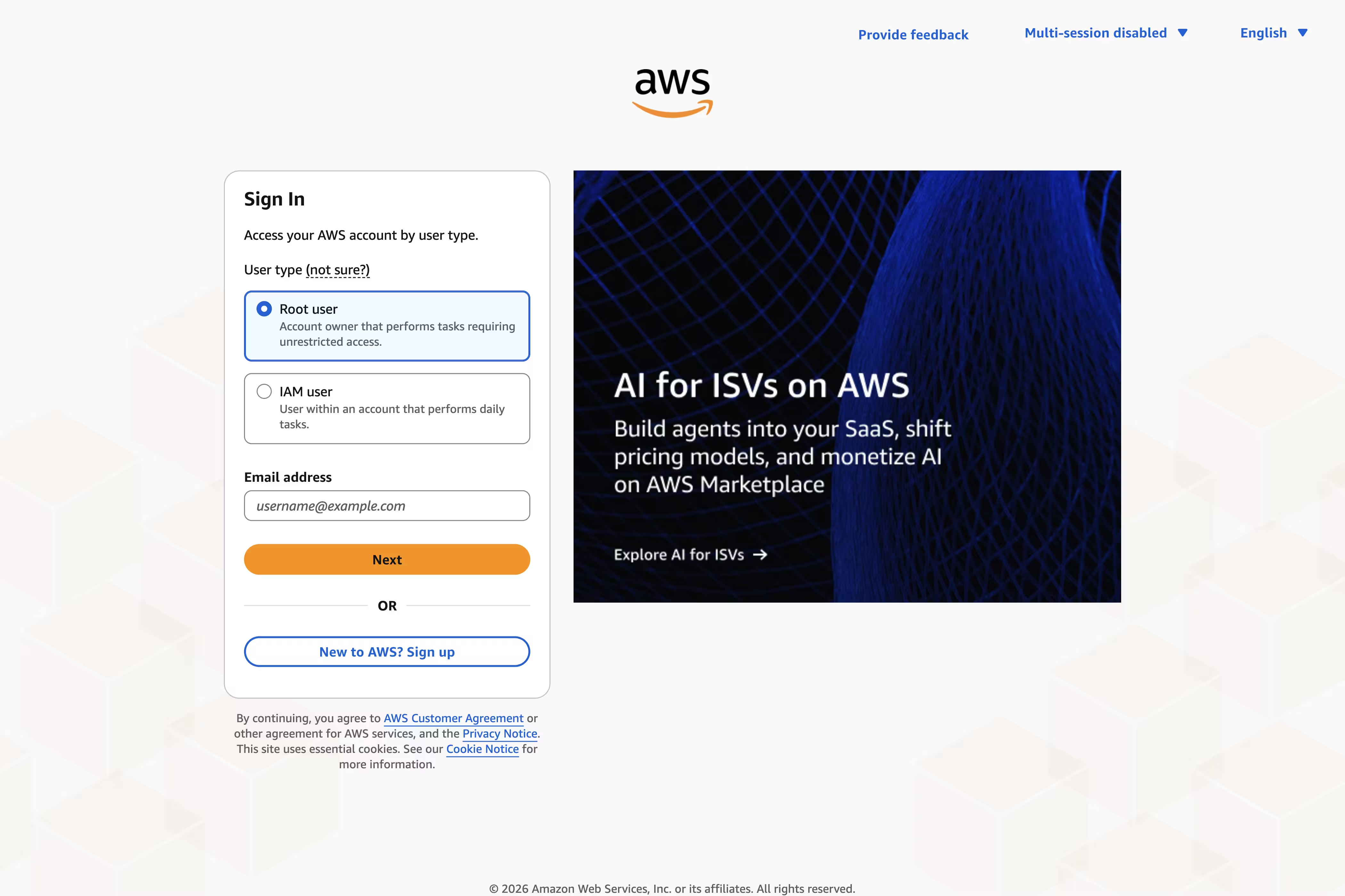
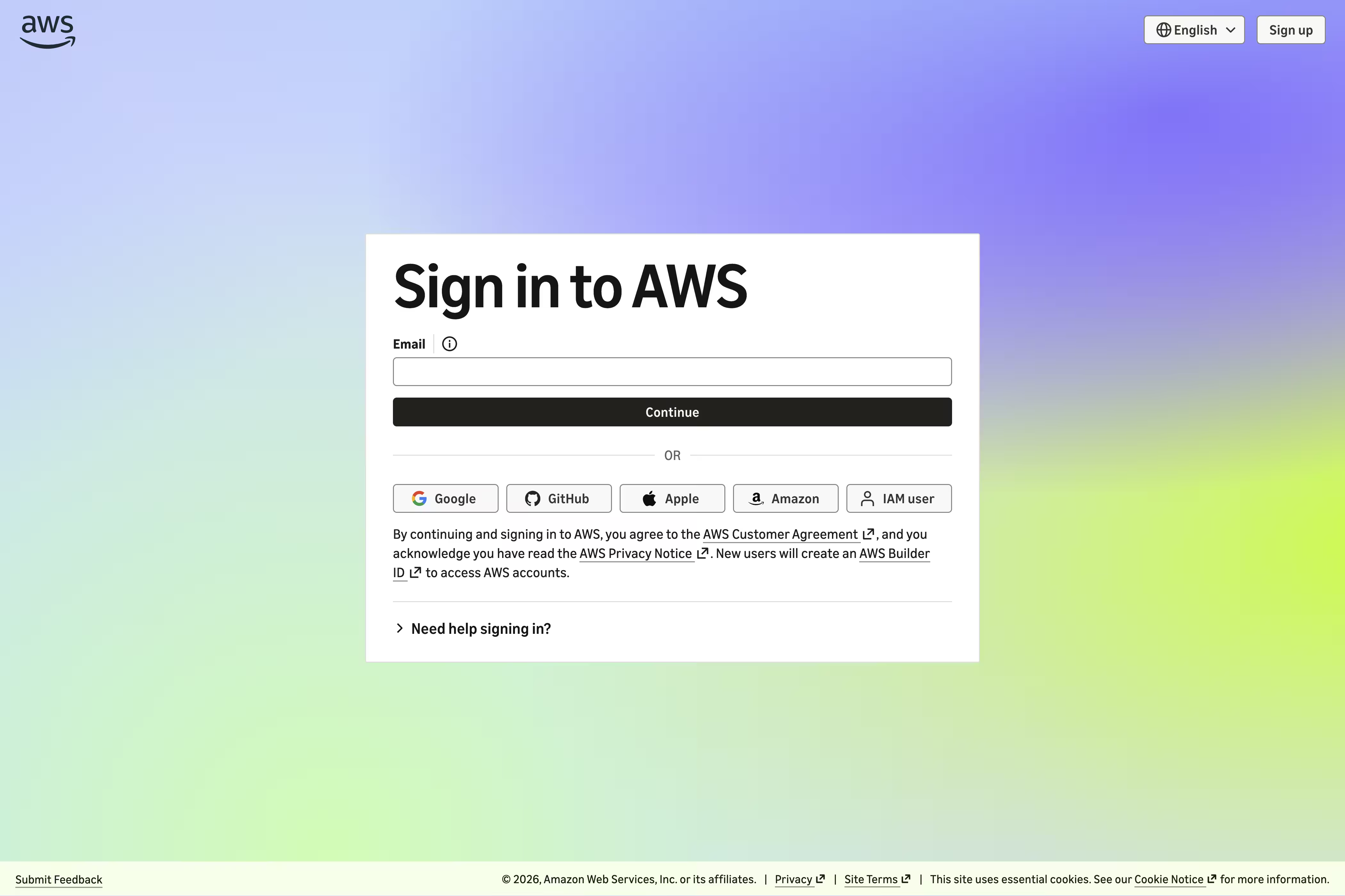
A suprisingly challenging part of updating sign-in was accounting for the numerous permutations of active AWS sessions possible given all the different sign-in methods. In addition, the various identity types coming from different backend APIs made it challenging to show a standard list metadata in the polished UI.
Some key learnings and reflection
- Collaboration, communication, and organization are vital in order to keep a project of this scale on track.
- Data is the key to your leaders hearts - We needed existing operational metrics, research study insights, financial impact projections, and more to show our leaders that the large investment of resources was worth taking on a design initiative like this.